
Richmond City Deed Records and Instruments
A deed file covers far more than a change of ownership. The land index may point to deeds of conveyance, deeds of trust, releases, plats, or other instruments. Each type touches a real-property interest. Each filing carries its own date, parties, legal description, and document reference. A tax card's sale field can help you find a transaction. But the filed instrument remains the source for the recorded terms and the actual description. A later release or corrective deed can also change how an earlier entry reads.
The Circuit Court Clerk records more than transfers. A deed conveys title; a deed of trust records a secured interest. Releases, satisfactions, judgments, financing statements, plats, wills, and fiduciary records all sit within the Clerk's land-record universe. Decide what event you need to establish first. Then inspect the instrument and any filing it references.
| Deed Type | What It Does | Common Use |
|---|---|---|
| Deed | Records a conveyance and identifies parties and land | Track a transfer or confirm a grantee |
| Deed of trust | Records a security interest tied to real estate | Review a financing instrument and later release |
| Certificate of satisfaction or release | Shows a recorded discharge or release | Check whether a prior recorded interest was later addressed |
| Judgment or financing statement | Records a court or secured-party filing | Review a possible encumbrance with the full record |
| Plat or easement | Shows a referenced plan, lot or land-use interest | Read with the deed and its legal description |
Deed type matters. A grantor conveys an interest to a grantee. Yet the instrument's label alone does not settle every right or exception. A mortgage-related instrument may sit beside a deed in the records. But it does not transfer ownership by itself. A release can later clear a prior lien. Search the whole parcel trail rather than stopping at the newest deed.
Richmond City SRA Search Paths
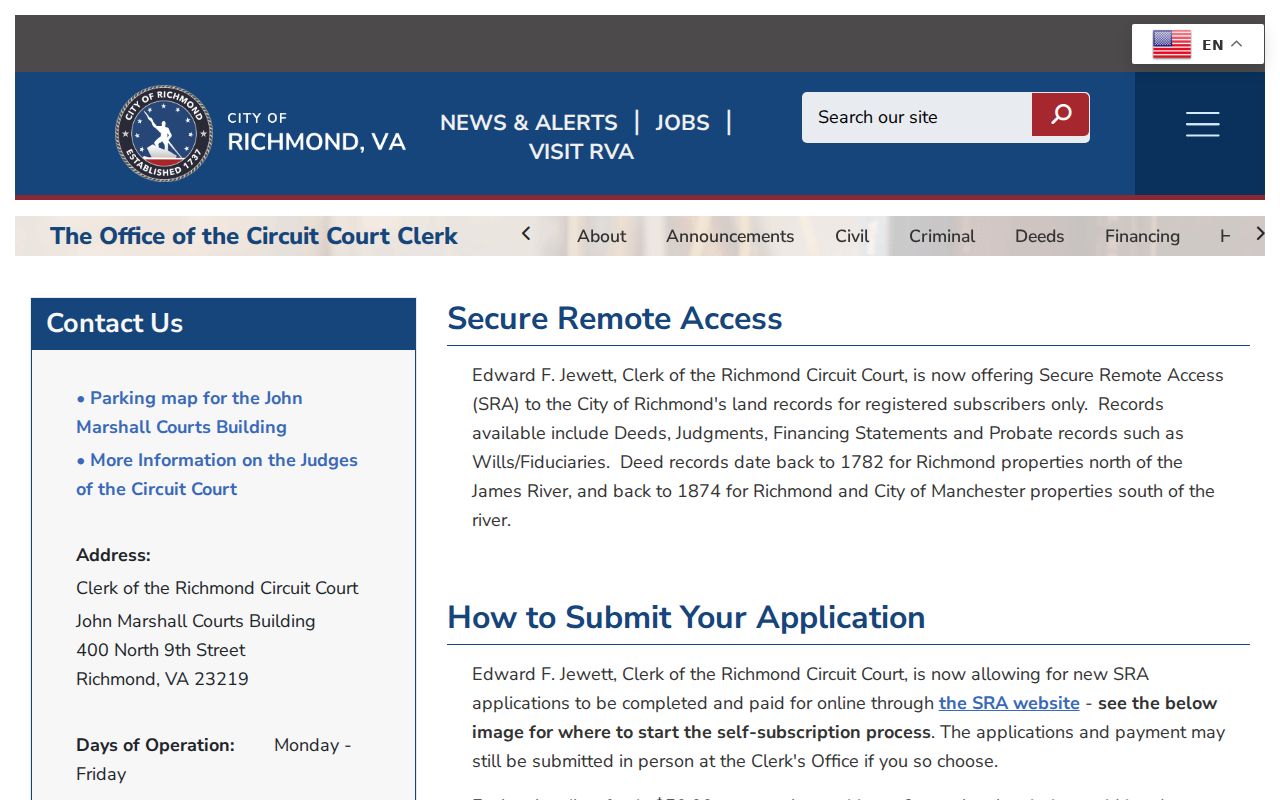
Richmond's modern index opens in 1993. The SRA interface offers several routes into the deed records. Indexing Search handles current indexed items. Online Index Books holds historical volumes. Historical Records Search reaches the deepest material. Those service labels do not always surface in a general web search. Match the index mode to the recording period you need. Some Virginia courts allow index-only access without charge. Richmond gates its images behind a subscriber account. Not every image opens online. Even so, an index entry is enough to request the instrument itself.
The Circuit Court Clerk connects Richmond City land records through Virginia Secure Remote Access. The service is known as SRA. Indexing Search covers newer runs. Online Index Books holds older indexes. Historical Records Search reaches the earliest volumes. Search by party role, date range, and deed series as your core concepts. When an older entry proves stubborn, call the Record Room for help tracking it down.
| Mode | What It Covers | When to Use It |
|---|---|---|
| Indexing Search | Newer records in Richmond’s current series | Begin for deeds from 1993 forward |
| Online Index Books | Older party indexes before the modern cutover | Use when an older deed does not appear in current indexing |
| Historical Records Search | Deep historic land books | Choose the historical series and division first |
| Record Room | Public inspection and clerk copy help | Fallback for access or index questions |
The Virginia SRA index and login is the entry point for the Clerk's online deed records. It opens the door, but it does not promise that every Richmond image is free to view.
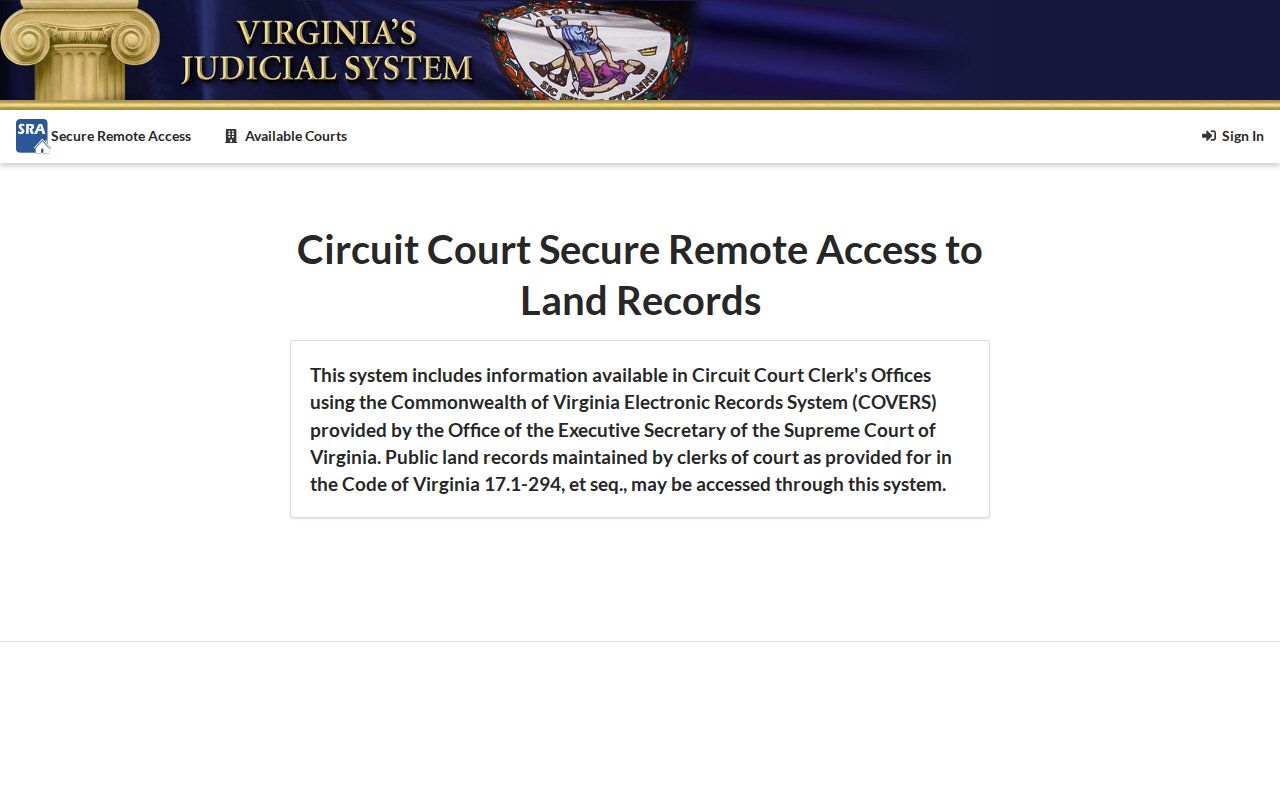
Some courts do allow free index-only access. Check Richmond's current status under Available Courts, and use the local Clerk's page for subscriber terms and history.
Walking Richmond City’s Party Index
Party indexes can be asymmetric. A grantor search and a grantee search answer different halves of the same transfer. Start with the party you know best and find the instrument where that name appears as seller or grantor. Then search the recipient's name for later conveyances. Common surnames return long lists. Narrow the results by date, instrument number, or PIN where the form allows. Preserve the exact citation from any result you rely on. Ask the Record Room before assuming a gap in the list means a broken chain.
A grantor conveys the interest; a grantee receives it. In a simple chain, one deed's grantee becomes the grantor on a later sale. Probate, trusts, entity names, and corrections can complicate that trail quickly. Start from the recorded deed you can identify. Note the parties, date, instrument number, and legal description. Then locate the prior grant to see how the current interest arose.
- Find the instrument for the transfer and record the grantee, grantor, date and reference.
- Read the legal description and PIN to confirm that the deed covers the parcel at issue.
- Search the prior grantor as grantee in the relevant earlier index.
- When an entry predates the current index, switch to the correct historic book or division.
- Grantor
- The person or entity that conveys the stated interest.
- Grantee
- The person or entity that receives the stated interest.
- Chain of title
- The sequence of recorded transfers and related instruments for a parcel.
- Instrument number
- A Clerk reference used to identify a filed document; older records may use book and page.
Richmond City PIN on Deed Filings
The Clerk's deed page requires the Tax Map/Parcel ID on the first page of covered instruments. Those instruments convey or relate to real-property interests. Richmond's standard PIN runs 11 digits. That makes the parcel number a strong bridge between the Assessor's card, the GIS map, and the land-record index. Copy it exactly as shown. The city publishes no official digit-by-digit breakdown. So do not infer one from a neighborhood or map location.
A recorded plat or survey may be referenced in the deed. That happens when a lot changes or a parcel is divided. Read that document along with the deed summary. A map outline cannot reveal an easement or covenant. One instrument may also cite prior filings that deserve their own review.
For a current address and parcel lead, start with the Richmond City property search. Then carry the PIN into SRA.
Richmond City Division I and II History
Two old court systems and one river shape how Richmond organizes its deed records. Division I holds north-side records dating to 1782. Division II covers the former city of Manchester south of the James. It starts in 1874. A merged-division series fills April 1, 1984 through August 31, 1993. The clerk cautions that anything recorded before September 1, 1993 may sit in the merged series. It may also sit in Division I or Division II. Know all three before concluding a record is missing.
Online indexing starts later than the oldest books. Division I indexing reaches back to 1966. Division II reaches 1937. Older deed books exist but must be reached through other SRA paths. Wills run on a separate sequence altogether. A present-day Richmond mailing address tells you nothing about which historic court handled an old conveyance. Rely on the legal description, any old Manchester reference, and the prior deed date instead.
The Clerk’s Richmond SRA history and coverage guide explains these splits. It also shows why one search mode rarely shows the full record trail.
When a chain crosses the river or a date cutover, carry the original instrument references and legal descriptions with you as you move between index series. Those identifiers are what tie one series to the next.
Richmond City Deed Copies and Fees
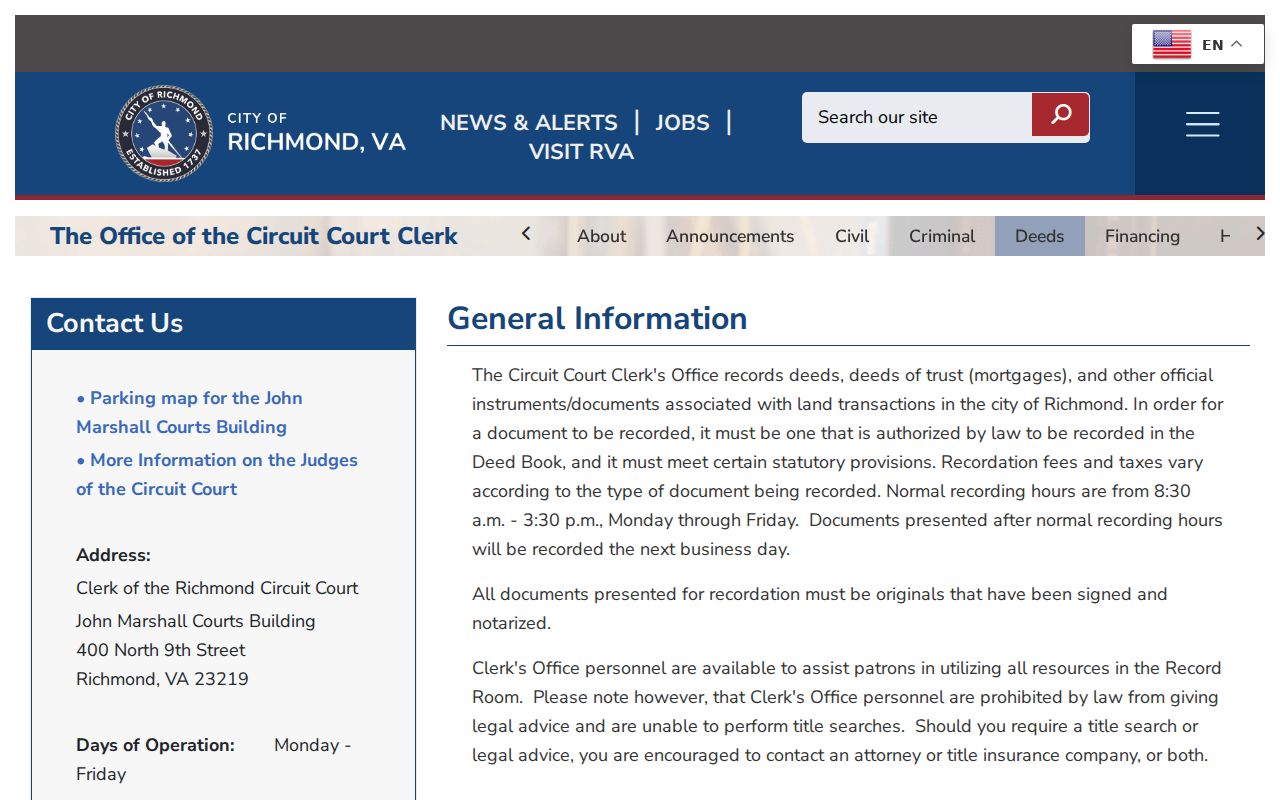
For copies in person, visit the Record Room at the John Marshall Courts Building, 400 N. 9th St. It is open weekdays from 8:30 a.m. to 4:30 p.m. Recording intake stops at 3:30 p.m. Call 804-646-6530 for land records or 804-646-6505 for the Clerk’s general line. Copies cost $0.50 per page. A certified copy adds $2, payable in advance. Written requests should identify the instrument with whatever details are known. Staff should not be asked to run an open-ended title search.
Remote document images require an approved SRA subscription. It costs $50 per month, with six months prepaid. The application can now be completed and paid online. The Clerk must still approve it. Subscribers who skip that step can inspect records in the Record Room instead. OCRA remote access serves Virginia attorneys and staff, not the general public.
By mail, include the document type, party names, and approximate recording date. Add the book/page or instrument number if known, plus the PIN and a return address. Call 804-646-6530 first to estimate the page count. Recording fees sit apart from copy fees. The Clerk announced a $3 increase for Deed Book and Will Book instruments. It begins July 1, 2026. Use the live fee calculator for current totals rather than an old receipt.
The Clerk’s public Record Room and copy instructions lay out inspection, fees, and written requests. A certified copy comes from the custodian, never from a commercial search result.
Richmond City VADeed Alert Matches
VADeed Alert is a monitoring service. It is not a block on lawful filings, and not a substitute index. The City Clerk describes it as notice. A match occurs when a document is recorded with a matching name or parcel reference. Similar names can trigger an alert about someone else’s property. Compare the recorded PIN, the parties, the instrument type, and the document date before reacting. To dig into an unfamiliar filing, obtain the instrument from the Clerk. Then contact the right professional or public office. An alert alone does not establish fraud.
The service is free and voluntary for qualifying recorded instruments. A subscriber registers an owner name or a Tax Map/Parcel ID. The service then sends a match alert. That makes it useful for watching a known parcel after a deed search. It still does not block a filing. Nor does it insure title or prove a new instrument is valid. Open the recorded document itself and compare its parties and legal description.
The Clerk’s deed-recording and VADeed Alert information covers the PIN notice and the city’s prevention route. It also posts recording instructions.
For LLC or fiduciary ownership, search the exact recorded name and PIN. SCC CIS can add entity context. The recorded deed remains the land-title source.
Richmond City Deeds and Chancery Files
When a basic grantor-grantee search leaves a gap, reach for the right historical collection. The Library of Virginia’s Chancery Records Index holds Richmond City images from 1783 through 1879. Those cases often involve partition, title, estate, debt, or land disputes. They may include plats, depositions, or heir names. The narrative context is valuable. But the recorded deed is still the starting point for any conveyance.
The Richmond Room adds city and suburban directories from 1819 to the present. It also holds newspapers and maps. A directory can link an old address to an occupant. That gives you a name to try in the deed index. Newspapers help with estate proceedings and land-sale notices. You then verify those in the Clerk’s records. The 1865 evacuation fire destroyed much of central Richmond. No official count of deed-book losses exists. So do not blame the fire for an unexplained index gap without evidence.
For chain-back methods and older-owner sources, see the Richmond City former owners page.
Getting a Copy of a Richmond City Deed
Once you have an index reference, take it to the custodian of the record. That is the Clerk. The office supports three retrieval routes. You can inspect records at the counter, send a written copy request, or use approved SRA image access. For a written request, list the instrument type, the parties named, an approximate recording date, the parcel identification number, and any book/page or document number. Then include a return address and advance payment. Historic records need one more detail. Note which division or series you searched so the Clerk can locate the deed records quickly.
Recorded, not guaranteed. The Richmond City deed index points to recorded instruments but does not prove clear title or reveal every unrecorded claim. A title professional must review the full chain and related documents.